The usual phrase is ‘behind the scenes.’ In this case, above works more accurately. In about a month, people from the U.S., Canada and Europe will be commemorating one of the most notable days in human history, D-Day. June 6, 1944 when the largest water-borne invasion in history took place and the tide turned during WWII. Much has been written and many films and programs produced sharing the courage and valor of the men who fought along the shores of Normandy, France that summer. All of it very much deserved. Less recognized is the story of the hundreds of airmen who made D-Day possible. General Dwight Eisenhower’s battle plan for D-Day included dropping paratroops behind enemy lines to secure bridges and roads, disrupt reinforcements and generally confuse the enemy. We know the story of the paratroopers through the series Band of Brothers, as well as many books and documentaries. Not told is the story of the men who flew the planes that dropped the paratroops over France in the early morning of June 6.
They left England on June 5, bound for two main areas, Ste Mère Eglise and Ste Marie du Mont. The air was literally filled with transport planes, mostly C-47s carrying 12 men ‘sticks.’ Storms had ravaged the English Channel for days and the remnants caused the formations to break up as they crossed, many flying under the clouds, making them more susceptible to German anti-aircraft fire. These planes they flew were not armored, carried no weapons, their only purpose to fly soldiers to the front. The pilots knew this as they approached the French coast. They knew that the Germans were waiting, every weapon trained toward the skies, targeted at them. Air Marshal Trafford Leigh Mallory of the Royal Air Force predicted 50 -70% of these planes would be shot down as they attempted to drop their troops over the pre-designated areas. The pilots knew this as well.
Colonel Charles H. Young, Commander of the 439th Troop Carrier Group, did not pull any punches when briefing his men. “The main thing we’re interested in tonight, even above our own safety—repeat, even above our own safety—is to put a closed-up, intact formation over our assigned drop zone (DZ) at the proper time, so these paratroopers of ours can get on the ground in the best possible fighting condition. Each pilot among you is charged with the direct responsibility of delivering his troops to the assigned DZ.” And that is what the pilots did. Flying low and slow, they kept to their course until all twelve men had parachuted from the plane. At that altitude and speed, necessary for the drop, the planes were easier targets for the Germans and many were indeed shot down. Not the 50-70% Mallory predicted, but enough that the hangars back in England had several empty spots on June 7.
History is filled with stories of courage and duty performed by soldiers behind the scenes doing important work. None more so than the pilots over Normandy on June 6, 1944. Their bravery and service was as important as the paratroopers behind enemy lines and the infantrymen storming the beaches. As the eyes of the world focus on those beaches and French towns next month, let us not forget to look up and think of the men above the scenes who gave just as much.
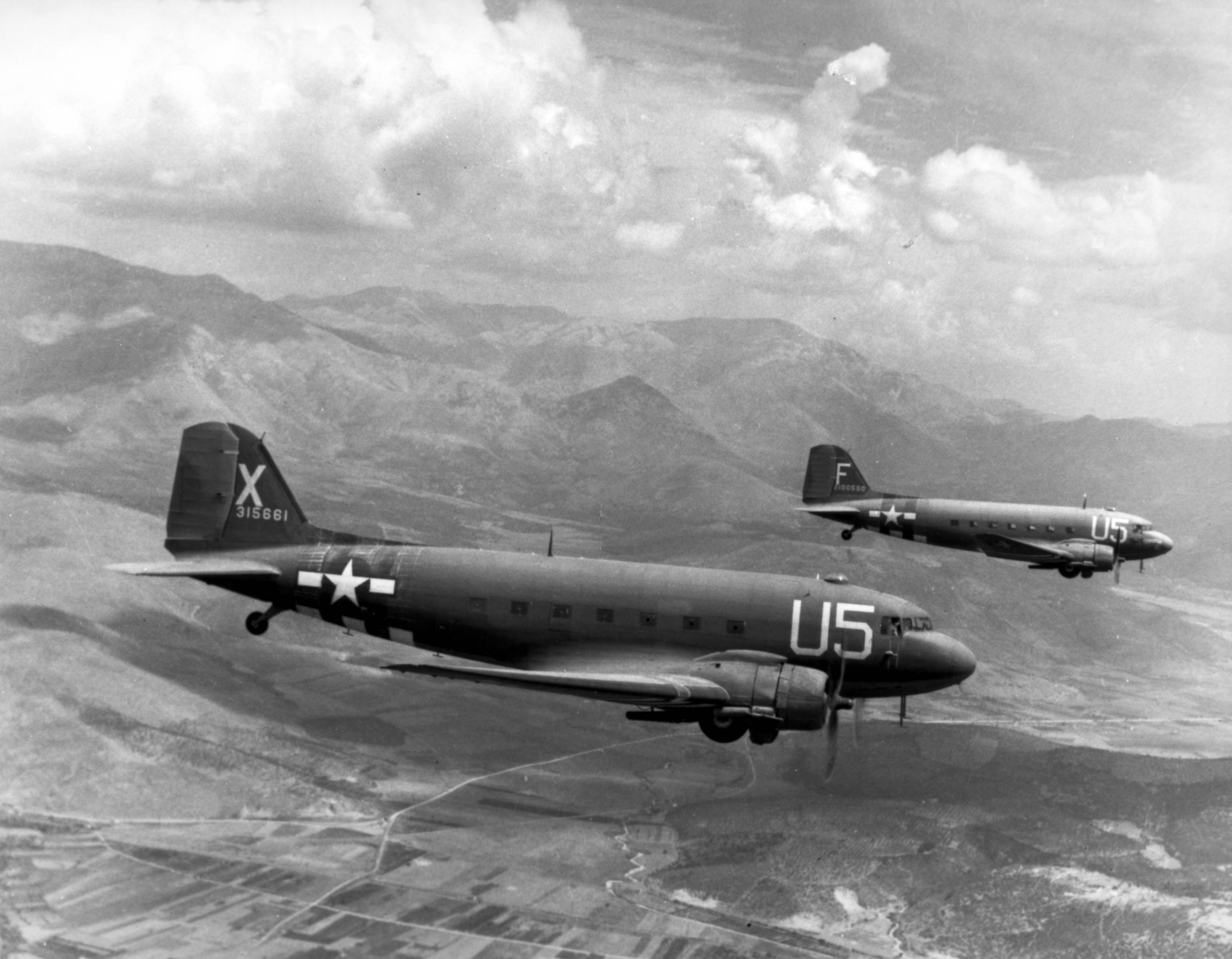
This month of May, I will be portraying a former WWII pilot in a film. The character’s specific role in the war is not mentioned, so I was left to create my own back story for him. I chose to make him a C-47 pilot and am honored to, in some small way commemorate the bravery of the hundreds of transport pilots who saw service during WWII.
2 Responses
It was very good of you to choose to represent one of the least acknowledged heroes of WWII. So often these pilots are treated as a faceless conveyor belt that delivered “real heroes” to their destinations or are only mentioned when they failed to achieve their goals, as if pin-pointing a drop zone at night through a solid cloud cover and a hell-storm of flak were a stroll in the park. On the other hand, hardly a word is mentioned about the 1000-plus heavy bombers who failed to drop a single bomb on their intended targets at Omaha Beach.
Thanks Dan. After years of studying history, and specifically military history, I find myself more drawn to the stories of those that don’t usually make the books and movies. Also, while on the film shoot last week, I had the opportunity to actually spend some time inside a C-47 and the experience was quite moving.