In 1858, Anna Jarvis organized “Mother’s Work Days.” In 1872, Boston poet Julia Ward Howe established a special day for mothers. In 1905, Anna Jarvis began an effort to honor her recently deceased mother and all mothers, that effort culminating in 1914 with Congress passing a Mother’s Day resolution and founding the day we commemorate today.
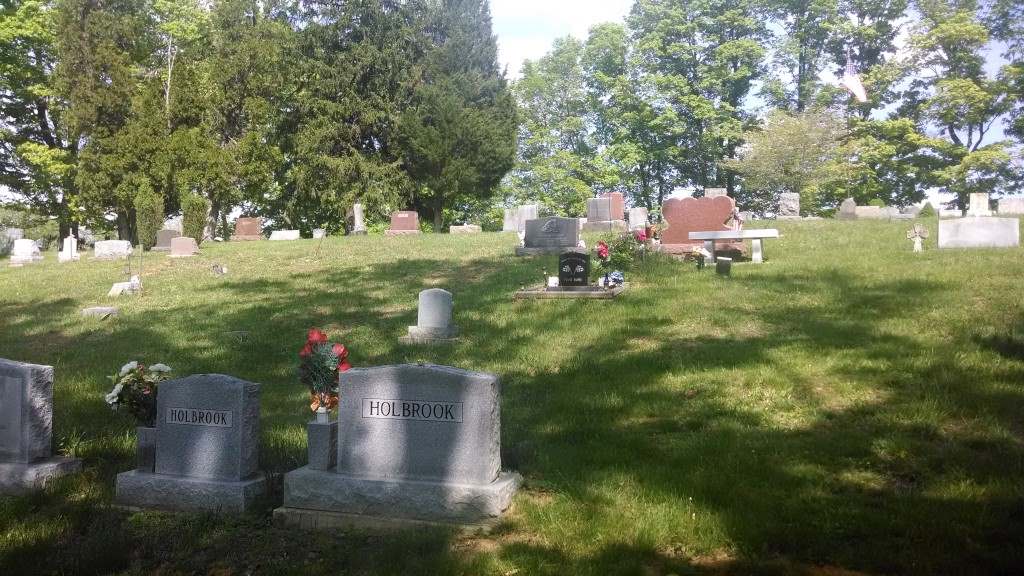
For the past 34 years, I have commemorated Mother’s Day at a little cemetery on a hill in Southern Ohio. I, along with my siblings continued that tradition this year on Sunday afternoon. When my mother was laid to rest there in 1980, she was the only family member in the cemetery. Today, my father, both sets of grandparents, an uncle, two cousins and a cousin’s wife and a cousin’s child are there.
I had driven by this cemetery in my younger years a few times, never paying much attention to it. Today, it is a familiar place, one I can visualize in great detail in my mind. It sits in a bend of a country road surrounded by hills and farm fields. The cemetery itself is bordered by a nondescript wire fence lined with massive trees that have stood there for a century or more. Inside the fence, the cemetery forms a small hill, the center topped with a flag pole always flying the U.S. colors. On the South slope is the old part of the cemetery. Stones with birth and death dates in the 19th century. Some Civil War soldiers are buried on this South slope, flags proudly flying near the stones. As you make your way up the rise, the dates move forward in time. Near the top, where the massive cedar trees stand watch, you begin to see stones with birth dates in the 1900s. Far too many of these with death dates close to those of birth. As you make your way down the North slope, time marches on until you get about two thirds of the way down and the death dates move in to the 21st century. It is on this North side of the hill that my family lies.
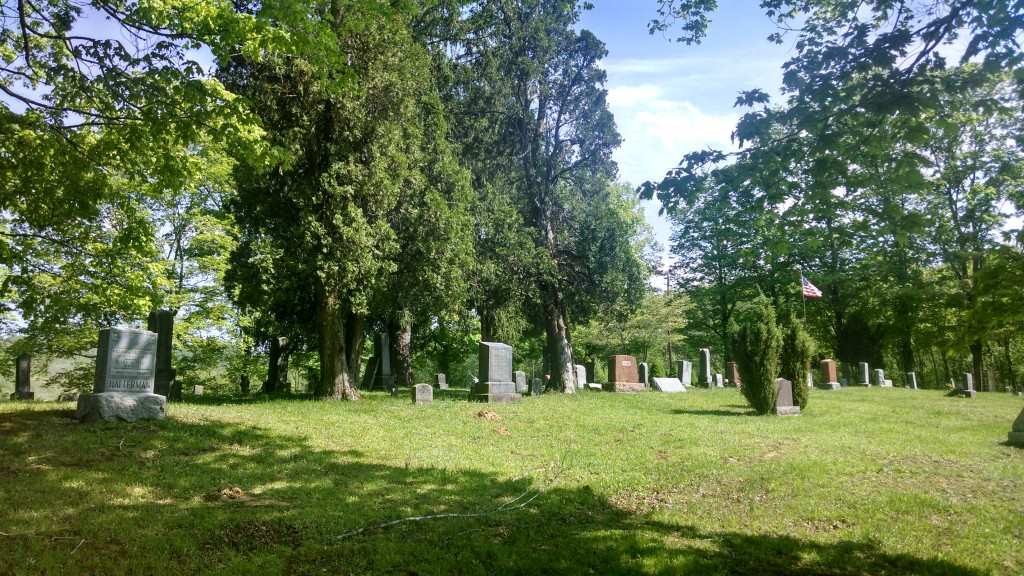
I have visited this cemetery many times over the years. In all four seasons. For just a few minutes while driving near the area. For an afternoon when making an intentional visit. Over the years, this cemetery has become a place of comfort to me. True, a place of grieving each time my family gathers to say goodbye to a loved one. But, at other times, usually alone, I come to honor my parents and others. It is a place more peaceful than any other I have found. Something about the isolation of the cemetery, the age-old trees surrounding it, the contour of the hill provides a sense of rest, not grief. On a summer day, breezes gently float through the cemetery, rustling the leaves in a way that almost sounds like the whispering of those lying there.
One of my favorite graves to visit is that of John W. Campbell. John was a sharpshooter during the Civil War. Next to him is his son Arthur W., veteran of WWI. They are on that South side of the hill, along with William Boyd of the 53rd Ohio Infantry (Civil War) and Lucinda May Whaley Willet who was born in 1878 and lived far too short a 35 year life. Then there is Clide Nelson who was a solider in WWII. There are young old, veterans from every war from the Civil War through Vietnam, husbands and wives side-by-side and lone graves with no apparent relations to keep them company.
I am certain I will return to the cemetery again and again to visit my parents and family, walk among the old stones and think about the lives represented by them. When I do, that sense of peace and rest will be there, waiting for me as it perhaps does for all who come here.
No responses yet