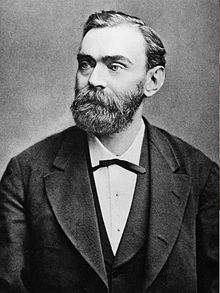
Alfred Nobel
History is filled with stories of irony, none more fascinating than those of unintended consequences. What seemed an excellent idea that makes life better can lead to something totally unforeseen. A case in point is the invention of Dynamite. Swedish chemist and engineer Alfred Nobel patented the new explosive in 1867. Made of nitroglycerin and some inert ingredients, the new explosive was created as a replacement for black powder for use in mining and tunneling operations. The explosive soon became widely used in military operations, as were some of Nobel’s other explosive inventions. A reference to Nobel as the merchant of death in a newspaper in 1888 shocked the inventor and caused him to view his creations much differently. Haunted by the thought of the deaths he now felt responsible for, Nobel created through his Will the establishment of a foundation to award five prizes for those who “confer the greatest benefit on mankind.” When he died in 1896 the provisions of the Will began the process to create what we now know as the Nobel Prizes.
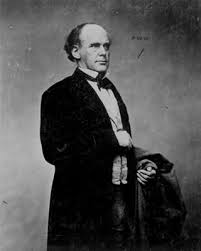
Salmon P. Chase
As the American Civil War began, it quickly became apparent that the United States would need to raise funds to pay for a war that would eventually cost $1 million per day. Secretary of the Treasury Salmon P. Chase and President Abraham developed a plan to levy a 3% tax on incomes above $800 per year. Lincoln approved the measure, as did Congress and the nation’s first income tax was born. It was a temporary tax, only created to fund the war effort and was rescinded in 1871. The concept of a federal tax on income was a radical idea in the mid-19th century, only a crisis like the Civil War creating a scenario that made such an idea feasible. But, the precedent had been set and in 1909 Congress passed the 16th Amendment creating a federal income tax system that is still in place today. It is doubtful that Lincoln and Chase expected an income tax to ever become permanent as they were simply addressing an immediate and desperate need to preserve the Union.
As far back as the Civil War, concerned citizens began to protest the ill affects of alcohol on society. Returning soldiers from the war, barely more than teenagers had learned to drink in the army and the habit they brought home with them was seen as destructive to family life. The Anti Saloon League was formed in Westerville, Ohio and spread throughout the country. Then, in 1920 the 18th Amendment to the Constitution passed, making illegal the manufacture and sale of alcoholic beverages. Hailed as a victory for society and the family, prohibition soon became the impetus for the rise of a criminal element that would sweep the nation and create infamous characters such as Al Capone and others. The new organized crime syndicates grew to enormous power and violence, negating the expected reduction in crime that prohibitionists had claimed would ensue. By the time prohibition was repealed in 1933, 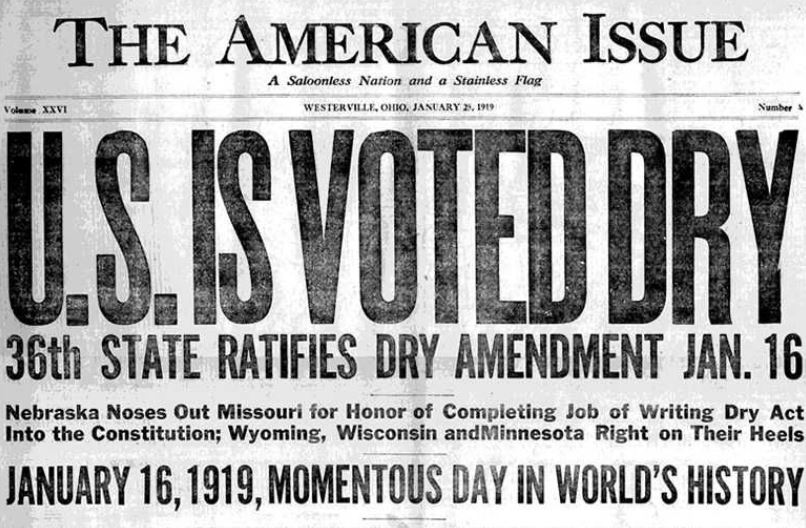 organized crime in America’s largest cities had become so strong and entrenched in society, that, when prohibition was repealed in 1931, the legal sale of alcohol had little impact on their viability.
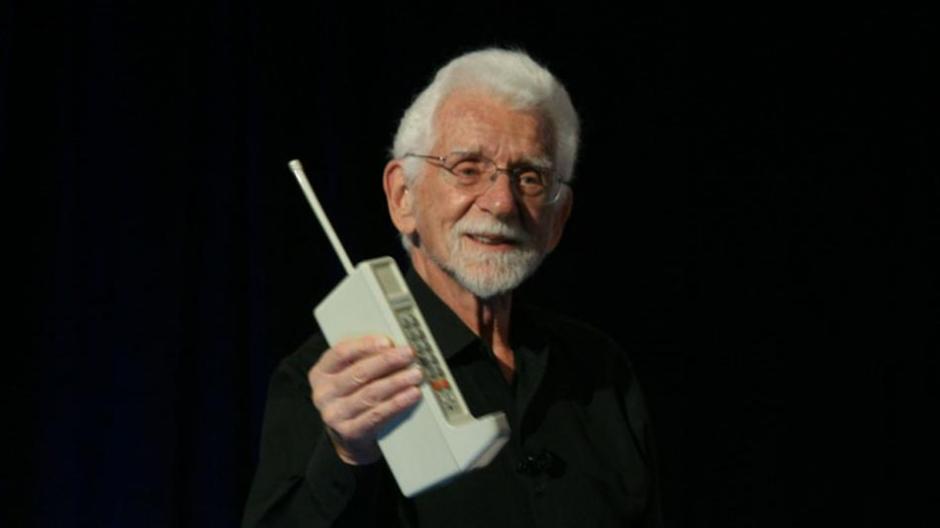
Marty Cooper
Motorola was the first company to produce a handheld mobile phone. On April 3, 1973, Martin Cooper, a Motorola researcher and executive, made the first mobile telephone call from handheld subscriber equipment, placing a call to Dr. Joel S. Engel of Bell Labs, his rival. It would be more than a generation later that mobile phones would be small enough and cheap enough to become available widely in the country. The new devices were hailed as a great new way to communicate, providing the opportunity to talk to anyone, anytime, from anywhere. And indeed, this was the case for many years until the devices themselves changed. As technology advanced, phones were able to do more, like send and receive text messages, take pictures, and eventually log on to the internet. Today, fewer and fewer people actually talk on their cell phones. Non-call use of mobile devices continues to rise, and text conversations are quickly replacing voice communications. It is doubtful Martin Cooper foresaw his mobile phone invention would eventually lead to a “heads down” society that would lose its ability to interact with each other directly.
Occasionally, there are voices that call out each time something new is brought forth to warn of the potential downside to an invention. More often than not, these voices are ignored in the rush to the latest, greatest thing. I wonder what we will be looking back on in 20 years and asking ourselves, “why didn’t we see that coming?”
No responses yet