It was more than a year before the signing of the Declaration of Independence by representatives of the thirteen British Colonial states. The date was June 17, 1775. Just across the Charles River from Boston sat Bunker Hill in Charlestown. Two months earlier, the British Army had clashed with Colonial militiamen at Lexington and Concord. General Sir Thomas Gage, smarting from his inability to stamp out the revolutionaries in April, planned an attack on the heights north of Boston. His intent, to obliterate what he saw as the rabble trouble makers and end the colonies dreams of rebellion. His plans were found out and 2,400 minutemen from Massachusetts, Connecticut, and New Hampshire gathered to defend the hill in Charlestown. After crossing the Charles River, Gage lead his 3,000 troops toward the heights.
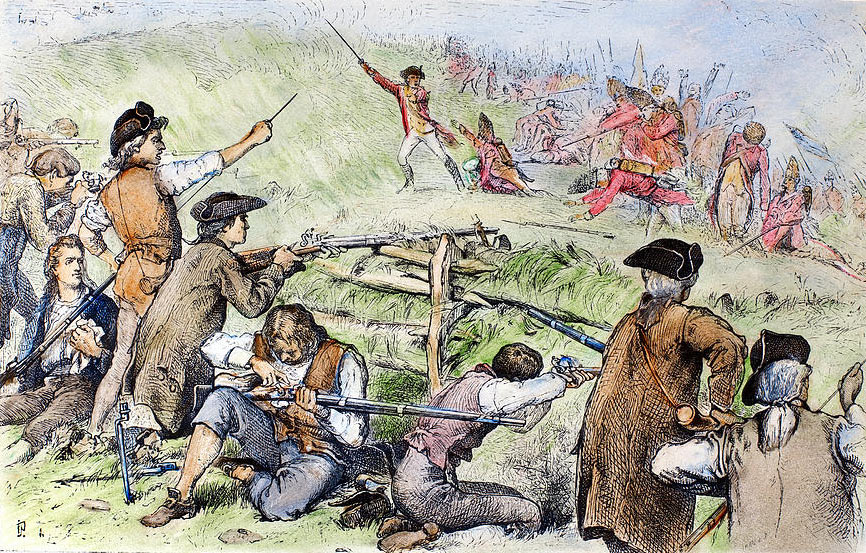
Twice the British forces attacked up the hill and were repulsed with heavy losses. On their third attempt, the colonists had run out of powder and shot, but refused to leave and fought the British in fierce hand-to-hand combat. Finally overwhelmed, the colonists retreated. While the British held the heights, the cost was severe – 1,054 killed and wounded to only 450 for the colonists. General Gage has to cancel his plans for further attacks and retreats from Boston, leaving it to the colonists. Two weeks later George Washington is appointed to take command of the troops there and begins to build his Continental Army.
It is July 2, 1863 and a young professor from Bowdoin College in Maine is faced with what appears to be an impossible task. The Battle of Gettysburg is in its second day and things have not gone well for the Union Army. Backed up to Cemetery Ridge and with much of its army still on the march, troops are being fed into the defensive line as they arrive. Part of Strong Vincent’s Brigade, Joshua Chamberlain’s 20th Maine regiments is assign a spot of the south side of the crest of Little Round Top. It is the end of the Union line. There are no troops to Chamberlain’s left and he is ordered to hold his line at all costs. Chamberlain can hear the fighting in from of him as Confederate troops fight their way through the wheatfield and Devil’s Den. Hurrying to get his line in place, Chamberlain encourages his 386 soldiers as best he can. The 20th Maine no sooner establishes their line when up the hill comes Colonel William C. Oats’ brigade of the 15th and 47th Alabama Infantry with twice the soldiers Chamberlain has to defend the hill.
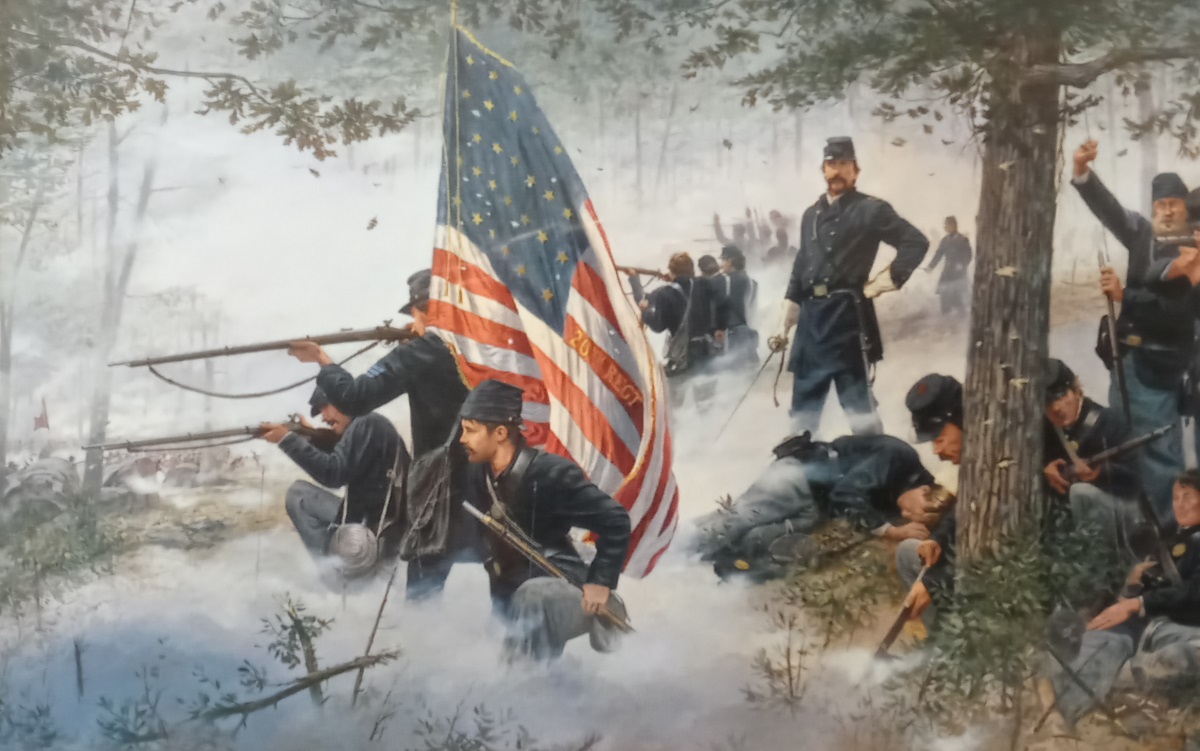 Oats attacked Chamberlain several times, each time extended his line to his right. Chamberlain had to do the same to his left until his ranks were so thin he doubted he could hold much longer. Finally, almost out of ammunition and seeing that the Confederates were once again charging up the hill, Chamberlain ordered his troops to fix bayonets. When Oats men were within thirty yards of Chamberlain’s line, his troops surged forward and down the hill. The Confederates were taken by complete surprise as the 20th Maine came lunging down the hill screaming with all their might. The Confederates who were not able to flee the onslaught were captured – Chamberlain reported 400. The attack on the Union right flank was halted and General Robert E. Lee’s dreams of destroying the Union Army north of Washington were put to an end.
It was a place no one ever wanted to be. The place where criminals were brought to pay the ultimate price for their transgressions. It was a small hill just north of the city and had been used for executions for some time. Nearby were tombs – a cemetery – that had probably existed for generations. On this particular day, three men were being brought to the hill so their sentence could be carried out. Trailing behind was a small band of onlookers. Some were there out of curiosity. Some perhaps to jeer at those being executed. One group had come in hopes that the one they followed would somehow escape his sentence of death.
The hill was called Golgotha. The city was Jerusalem. The man was Jesus. While the two men on either side of Jesus had been convicted of crimes and sentenced to death by crucifixion, Jesus had been found guilty of nothing. Nonetheless, Roman prefect Pontius Pilot had acceded to the Jewish leaders demand that Jesus be crucified. And so, on this hill three men were nailed to crosses to await death.
Curiously to some, Jesus had refused to defend himself before the Jewish High Priest or Pilate. He said not a word to explain himself or to avoid his punishment. Many believed his refusal to do so proved he was a false messiah. His followers couldn’t understand what was going on. Jesus had promised he would rule his kingdom of those who believed in him. And yet, here he was being scourged and crucified like a common criminal. It was if he had chosen to die on this hill. Had accepted his fate when he could have easily avoided it by using his power to overcome his enemies. It made sense to no one. 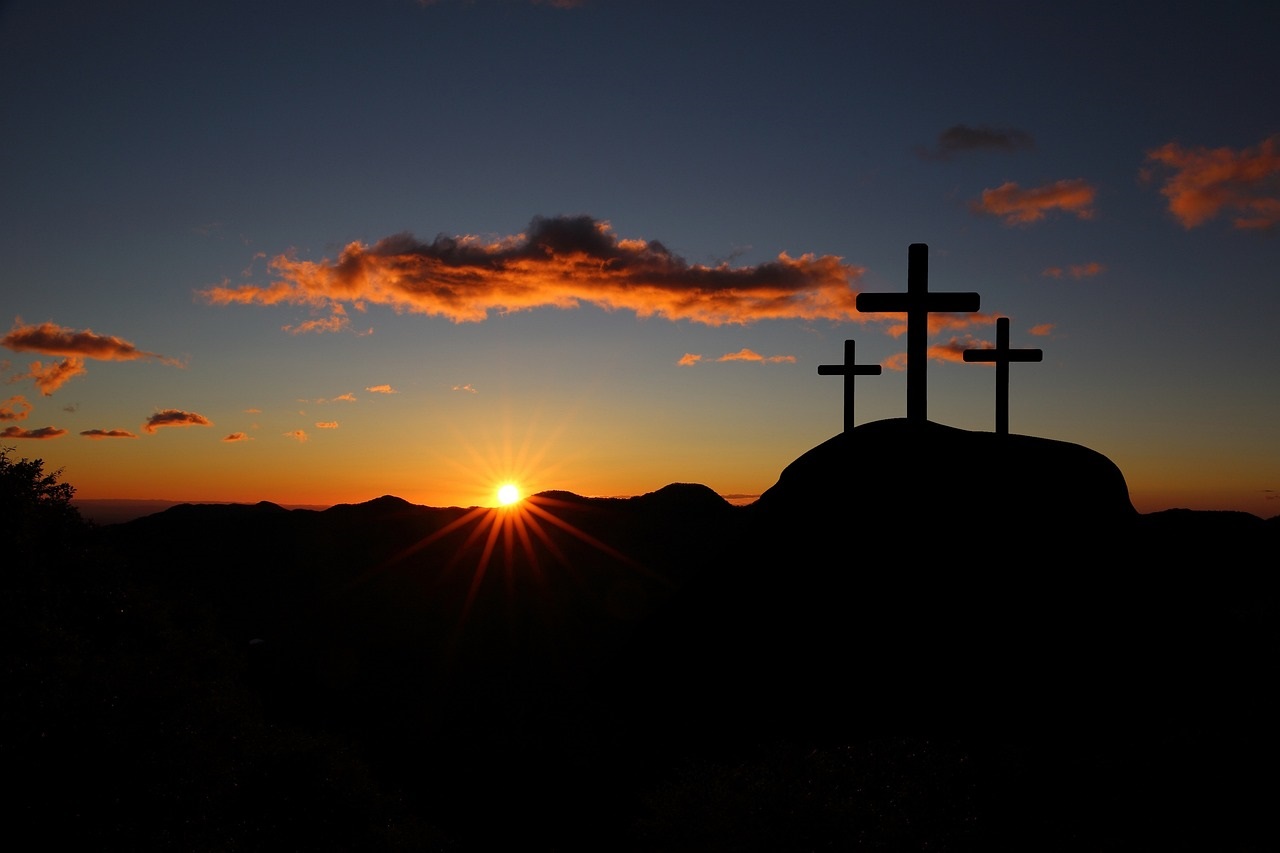
Three days later, of course, the answer to everyone’s questions about why Jesus chose to die on that hill were answered. And those answers are as meaningful today as they were two thousand years ago.
What hill are you willing to die on? What line will you not cross? What cross are you willing to bear for the sake of your beliefs? These are questions we must all answer at some point in our lives. And those answers will determine who we are and what will become of us.
For God so loved the world that he gave his one and only Son, that whoever believes in him shall not perish but have eternal life. For God did not send his Son into the world to condemn the world, but to save the world through him. Whoever believes in him is not condemned, but whoever does not believe stands condemned already because they have not believed in the name of God’s one and only Son.
John 3: 16 – 18
No responses yet